















When farmers ask what size of farm needs an Aricks Residue Manager, the answer is not as simple as acres.
A 10,000-acre farm can benefit from the Residue Manager because every hour of seeding efficiency matters. But a 1,500-acre farm dealing with heavy straw, wet residue, or inconsistent seed placement may see just as much value.
The real question is not always, “How big is your farm?”
It is, “How much residue are you asking your drill to handle?”
Residue Problems Do Not Only Happen on Big Farms
Hairpinning, poor seed-to-soil contact, uneven emergence, and plugged-up seeding conditions are not limited to large operations.
They show up when residue is heavy, damp, unevenly spread, or slow to break down.
That can happen on any farm size, especially in:
- No-till seeding systems
- Heavy cereal stubble
- Wet spring conditions
- Fields with uneven straw distribution
- High-residue rotations
- Short seeding windows
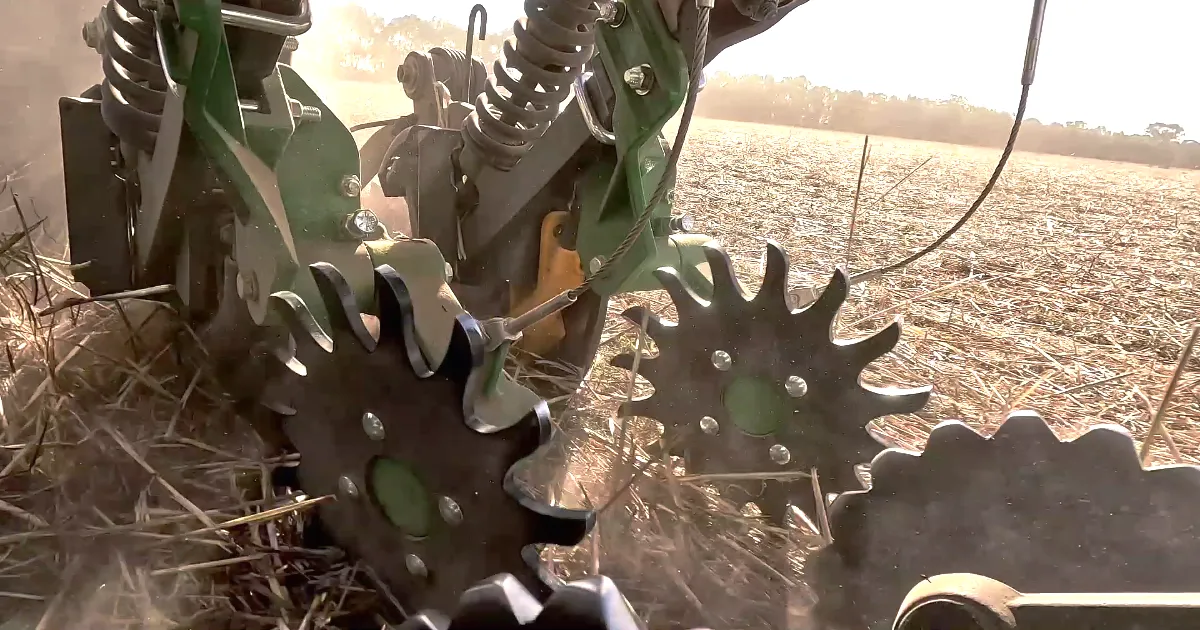
When residue gets pushed into the seed slot instead of cleared away, the seed may not get placed properly into the soil. That can lead to inconsistent germination, uneven emergence, and more frustration once the crop starts coming up.
The Aricks Residue Manager is built to help clear a path ahead of the opener so the seed has a better chance of landing where it should.
Smaller Farms: When the Rezidue Manager Still Makes Sense
For smaller farms, the decision usually comes down to whether residue is already costing you performance.
If you are only seeding a few acres and conditions are usually clean, the investment may not feel as urgent. But if you are running a John Deere air seeder in no-till or high-residue fields, the Aricks Residue Manager can still make a difference.
Smaller farms can benefit when they are dealing with:
- Hairpinning in damp straw
- Uneven seed placement
- Poor emergence in high-residue areas
- Delayed seeding because residue is not drying down
- Extra passes to manage residue before seeding
For these operations, the benefit is not just speed. It is confidence.
If your drill can move through residue more consistently, you spend less time waiting for perfect conditions and more time getting the crop seeded properly.
Mid-Sized Farms: Where the Payoff Becomes More Obvious
For mid-sized farms, the Aricks Residue Manager often starts making even more sense because small problems repeat across more acres.
A little hairpinning in one field is annoying.
Hairpinning across hundreds or thousands of acres becomes a crop establishment problem.
As acres increase, so does the value of:
- More consistent seed placement
- Better seed-to-soil contact
- Less stopping and checking
- Reduced frustration in tough residue
- Fewer delays during narrow seeding windows
Mid-sized farms usually do not have time to fight the same residue problem field after field. The Rezidue Manager helps reduce one of the most common barriers to consistent no-till seeding performance.
Large Farms: Efficiency Across Every Acre
For large farms, the value of the Aricks Rezidue Manager often comes down to consistency and time.
When you are covering a large number of acres, residue issues add up quickly. A small delay, a poor stand, or a field that needs extra attention can create a ripple effect across the entire seeding season.
Large farms benefit from the Residue Manager because it helps:
- Keep the drill moving in tough residue conditions
- Reduce the impact of damp straw and heavy trash
- Improve consistency across more acres
- Support no-till seeding without extra residue management passes
- Reduce time spent fighting preventable seeding problems
The more acres you seed, the more valuable it becomes to have every opener working in a cleaner, more consistent path.
It Comes Down to Conditions, Not Just Acres
The Aricks Residue Manager is not only for the biggest farms.
It is for farms that are serious about managing residue before it affects seed placement.
A smaller farm in heavy no-till cereal stubble may benefit more than a larger farm with lighter residue and easier seeding conditions. A large farm may see the biggest efficiency gain because the same problem is multiplied across more acres.
The best fit usually comes down to:
- How much residue you are seeding into
- How often you deal with hairpinning
- How tight your seeding window is
- How important consistent emergence is to your operation
- Whether you are trying to reduce extra residue management passes
If residue is limiting how well your John Deere air seeder performs, farm size is only part of the equation.
Bottom Line
The Aricks Residue Manager can benefit farms of many sizes, but it matters most where residue is creating real seeding challenges.
If you are dealing with hairpinning, poor seed-to-soil contact, uneven emergence, or high-residue no-till conditions, the Residue Manager helps clear the path ahead of the opener and gives your crop a stronger start.
For small farms, that can mean better consistency.
For mid-sized farms, it can mean fewer repeated problems across the field.
For large farms, it can mean more efficiency across every acre.
At the end of the day, the Aricks Residue Manager is not about farming more acres. It is about giving every acre a cleaner, more consistent start.
If you have questions about the Aricks Residue Manager or whether it is the right fit for your John Deere air seeder, call 1-855-612-7006 to talk with our team.