














When planting season arrives, the last thing you want is to discover fertilizer problems halfway through the field. Blocked lines, uneven flow, or worn components can create streaks across the crop that show up weeks later. By then, it’s too late to fix.
A quick inspection before the season starts can save a lot of headaches. Here are five signs your fertilizer system may need attention before you start planting.
1. Uneven Residue or Streaks from Last Year
If you noticed strips of weaker growth in your fields last season, inconsistent fertilizer flow may have been the cause. Blocked or partially restricted lines often go unnoticed during planting but show up later as uneven crop growth.
2. Fertilizer Dust and Buildup in Lines
Fertilizer dust can accumulate inside hoses and delivery tubes over time. That buildup can restrict flow and lead to partial blockages once product starts moving through the system again.
Before planting, check hoses and manifolds for buildup or hardened fertilizer deposits.
3. Worn or Damaged Hoses
Fertilizer hoses take a lot of abuse. Cracks, kinks, or soft spots can restrict flow or lead to uneven distribution between runs.
Replacing damaged hoses before the season begins helps ensure every row receives the correct amount of fertilizer.
4. No Way to Detect Blocked Runs
One of the biggest challenges with fertilizer systems is that blockages are often invisible from the cab. If a line plugs, it may not be noticed until crop emergence reveals streaking across the field.
That’s where monitoring tools like the Fert Sensor come in.
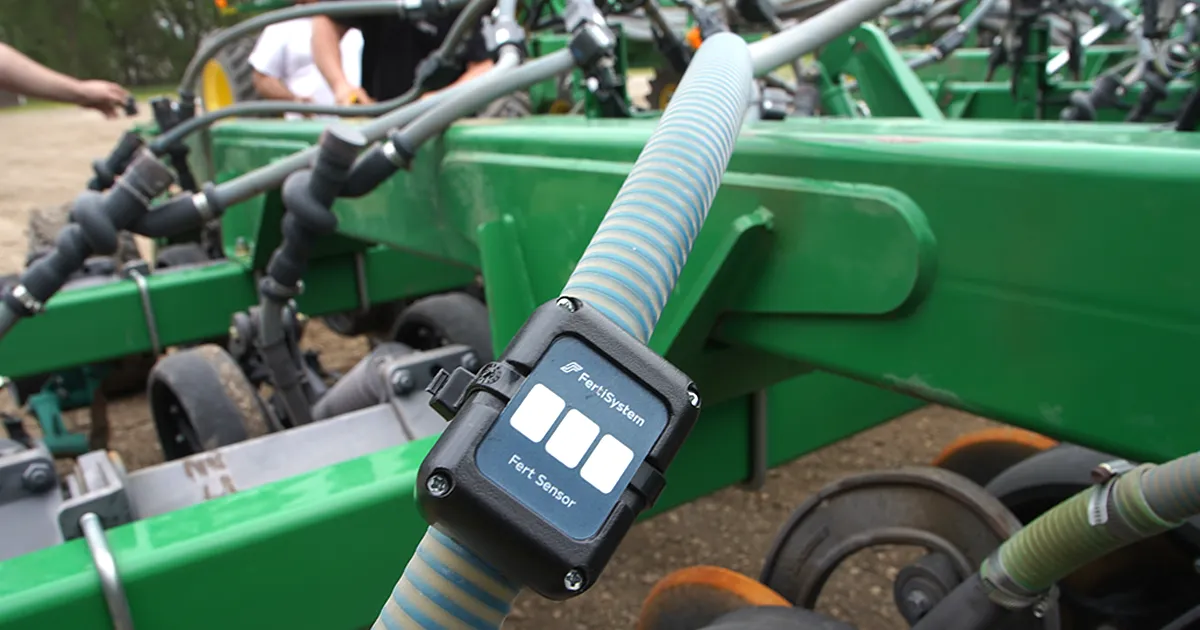
The Fert Sensor is a non-optical wireless flow sensor that mounts directly to the outside of the fertilizer hose. It detects vibration caused by product moving through the line and sends that information wirelessly to the cab.
Because it doesn’t rely on optical sensors, it works reliably in dusty fertilizer environments without constant cleaning.
5. No Real-Time Monitoring in the Cab
Knowing what each fertilizer run is doing during planting makes a big difference.
The AT200 Display receives wireless data from each Fert Sensor and shows operators exactly what’s happening across the system. It can monitor up to 120 runs, alerting operators immediately if flow slows or stops.
Catch Problems Before They Cost You
A few minutes inspecting your fertilizer system before planting can prevent major problems later.
If you have questions about the Fert Sensor or AT200 Flow Monitor, call 1-855-612-7006 to talk through your setup and see how fertilizer flow monitoring could fit into your seeding or planting system.