















Planting is about precision. If your seed isn’t sitting exactly where it should be, with firm contact to moisture, you could be giving up yield before the crop even emerges.
Why Seed-to-Soil Contact Matters
Germination comes down to moisture, temperature, and oxygen.
But none of that matters if the seed isn’t in proper contact with the soil.
When seeds hang up in the sidewall or sit above the bottom of the trench, air pockets form. That breaks the connection to moisture, delays germination, and leads to uneven emergence. Once plants are out of sync, they compete with each other, and that lost uniformity shows up at harvest.
What a Seed Firmer Actually Does
A seed firmer has one job: push the seed to the bottom of the furrow and eliminate air gaps. When the seed is placed firmly into moisture, roots grow downward immediately instead of searching sideways. The result is faster, more even emergence and a more uniform stand across the field.
The Real Issue: Consistency Over Acres
Most seed firmers work early on, but as they wear, they lose pressure. That’s when performance drops. Seeds aren’t consistently placed, and emergence starts to spread out again. The difference isn’t always obvious right away, but it shows up after a few hundred acres.
How Flo-Rite Keeps Performance Consistent
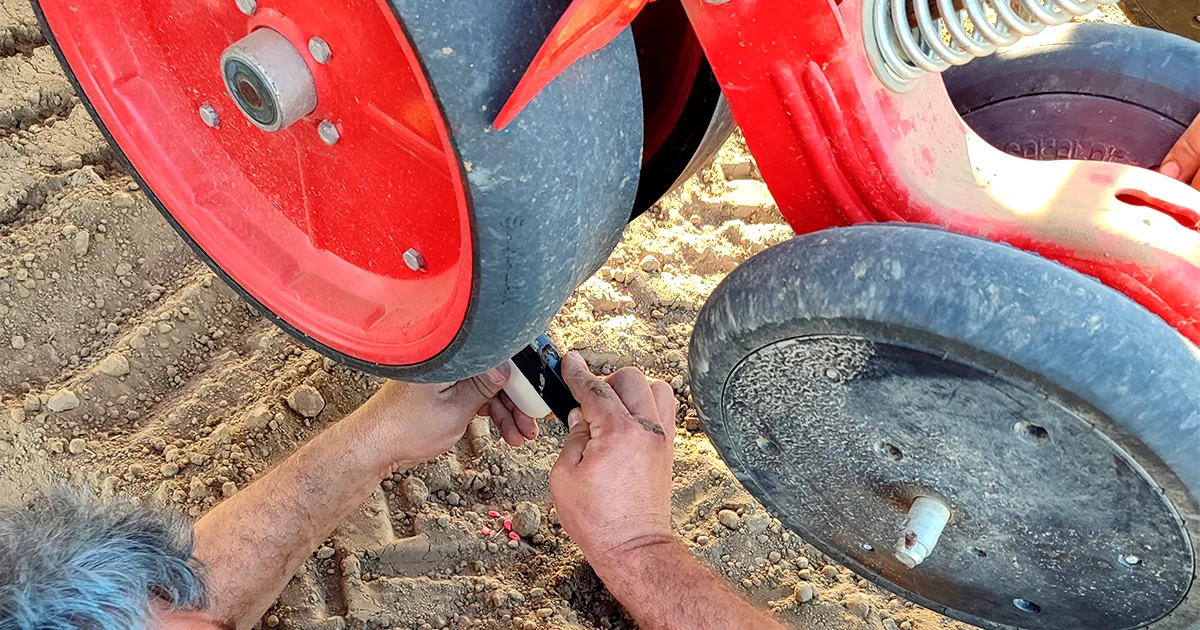
Flo-Rite focuses on maintaining consistent pressure from start to finish. Its memory polymer design holds downforce over time, keeping seed placement uniform across the field. By pressing seed firmly into the bottom of the trench, it improves moisture uptake and sets the stage for even germination.
In corn, this shows up as more consistent emergence and stronger early growth. In soybeans, getting the seed into moisture right away can mean emergence several days sooner, reducing exposure to disease and early stress.
There are practical advantages as well. Flo-Rite’s enclosed stainless steel liquid tube protects in-furrow application from damage, while the replaceable wear plate reduces long-term replacement costs. It’s built to keep working without constant replacement or downtime.
The Bottom Line
Seed-to-soil contact is the foundation of your crop. Get that right, and everything else has a better chance of following. Call us at 1-855-612-7006 to learn more.